Receipts attached 7 sources
Sources
-
Other source
China's finance ministry outlines key agenda items for APEC Finance Ministers' Meeting
Four topics, attendance, link to Shenzhen leaders meeting
-
Other source
Finance minister to chair Apec meeting in HK
Chair, luncheon with business reps, press conference
-
Other source
經合組織財長會10月20日起舉行
CE agenda remarks, side events, registration
-
Other source
HK leader sets out APEC Finance Ministers' Meeting 2026 agenda
Venue, first time in HK
-
Other source
External merchandise trade statistics for August 2026
Export and import growth, deficit
-
Other source
Hong Kong, China in APEC
APEC >80% of HK external trade
-
Other source
APEC Sees 3.2% Growth in 2026 as Exports Jump, Inflation Accelerates
Regional forecasts, freight rates
Limits
The luncheon with business representatives is described only in RTHK's account of the Ministry of Finance statement; the guest list and format are undisclosed. The agenda is a plan, and any final statement or deliverables are not yet known. The official 80% APEC share of Hong Kong trade carries no stated base year. Growth and inflation figures from the APEC Policy Support Unit are forecasts. The remark that trade ministers met earlier rests on APEC meeting documents, not a release.
Corrections
No correction notes have been added for this article.
Beijing’s four topics for the Hong Kong meeting are about fiscal policy, digital infrastructure money, inclusive finance and young professionals. Trade facilitation, payments and customs are not on the list, even as Hong Kong goods trade grows by half.
China’s Ministry of Finance said on October 14 that the APEC finance ministers meeting at the Hong Kong Convention and Exhibition Centre on October 20 and 21 will carry four topics, none of them trade, cross-border payments or customs. The only fixed business slot is a Tuesday luncheon.
The caveat matters for anyone flying in with a deal sheet. A finance ministers’ meeting is a fiscal and macroeconomic track, not a trade negotiation, and the ministry’s four topics are fiscal policy that supports livelihoods, financing for digital infrastructure, inclusive finance “in light of local conditions” and exchanges among young finance professionals. Chief Executive John Lee, outlining the meeting on October 6, also listed the global and regional macroeconomic outlook. Trade ministers met separately earlier in the year, and the leaders gather in Shenzhen in November.
What the APEC finance ministers will discuss
According to a Xinhua report carried by the State Council website on October 14, a ministry official said economies “urgently need to strengthen macroeconomic policy coordination” and that rapid advances in digital technology and artificial intelligence “generated new demand for digital infrastructure investment and financing.” Finance ministers or representatives of all 21 APEC economies will attend, along with international organizations, and the aim is consensus documents that feed into the 33rd Economic Leaders’ Meeting in Shenzhen.
RTHK reported the same day that Finance Minister Lan Foan will chair and Vice Minister Liao Min will speak for China. The side program includes a closed-door ministers’ session and a luncheon with Asia-Pacific business representatives on Tuesday, before the formal meeting opens, then a press conference on Wednesday. The Hong Kong government news service adds a welcome dinner, seminars and site visits, and says the ministry is handling registration and accreditation.
For companies, the digital infrastructure financing item is the one with a commercial edge. It points toward data centers, networks and AI capacity, and toward how public money and private capital share the cost. The other items are mostly government business: budgets, household support and financial access for smaller firms and individuals.
The trade numbers behind the meeting
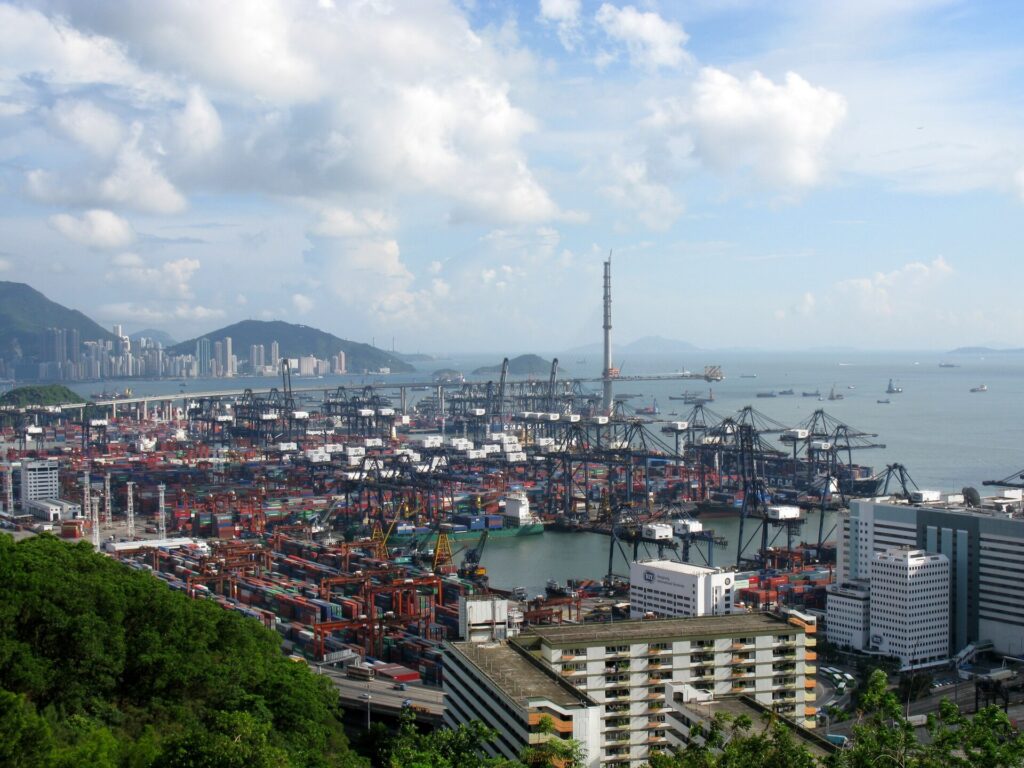
The setting is a trade boom. The Census and Statistics Department reported on September 24 that Hong Kong total exports of goods rose 53.0% year on year in August 2026 to HK$667.9 billion and imports rose 60.0% to HK$739.1 billion, leaving a visible trade deficit of HK$71.2 billion, or 9.6% of imports. A government spokesman called it the nineteenth consecutive month of double-digit export growth, driven by “robust demand for AI-related electronic products.”
Most of that flows inside APEC. The Trade and Industry Department states that trade with other APEC members accounts for more than 80% of Hong Kong’s external trade, a figure the Commerce and Economic Development Bureau gives as “some 80%.” In the first eight months of 2026, the strongest export growth was to Singapore (up 82.4%), Taiwan (up 73.2%), the USA (up 63.4%), Thailand and Vietnam, all APEC economies, alongside the Mainland (up 46.7%).
The regional picture is similar. The APEC Policy Support Unit’s August 2026 Regional Trends Analysis forecast regional growth of 3.2% in 2026, after 3.3% in 2025, with merchandise exports up 18.8% by value in the first quarter. It also forecast inflation rising to 2.9% from 2.4%, and said higher fuel and insurance costs and tight shipping capacity had pushed up freight rates on several intra-Asia and long-haul routes.
What attending companies should watch
Analysis: three things are worth tracking this week. First, whether the Wednesday press conference produces a joint ministerial statement and what it says on digital infrastructure financing, since any language on public-private funding models is the closest the track comes to a business deliverable. Second, the tone on inflation and energy, given the Policy Support Unit’s warning that central banks face price pressure while growth moderates. Third, any reference to trade or supply chains in the final text; the ministry official spoke of keeping “industrial and supply chains” stable, which echoes the leaders’ track agenda covered earlier on this site.
Business visitors should not expect access. The luncheon is by invitation, the formal sessions are closed, and logistics around the convention center are covered in earlier TockHK reporting on the meeting. Frequent travelers may also want the ABTC 90-day stay change and the Shenzhen leaders week schedule.
The gap between Hong Kong’s trade surge and a finance agenda built around budgets and young professionals is not a contradiction. It is a division of labor, with payments and paperless trade sitting in other APEC committees. The money men, for now, are talking about money.