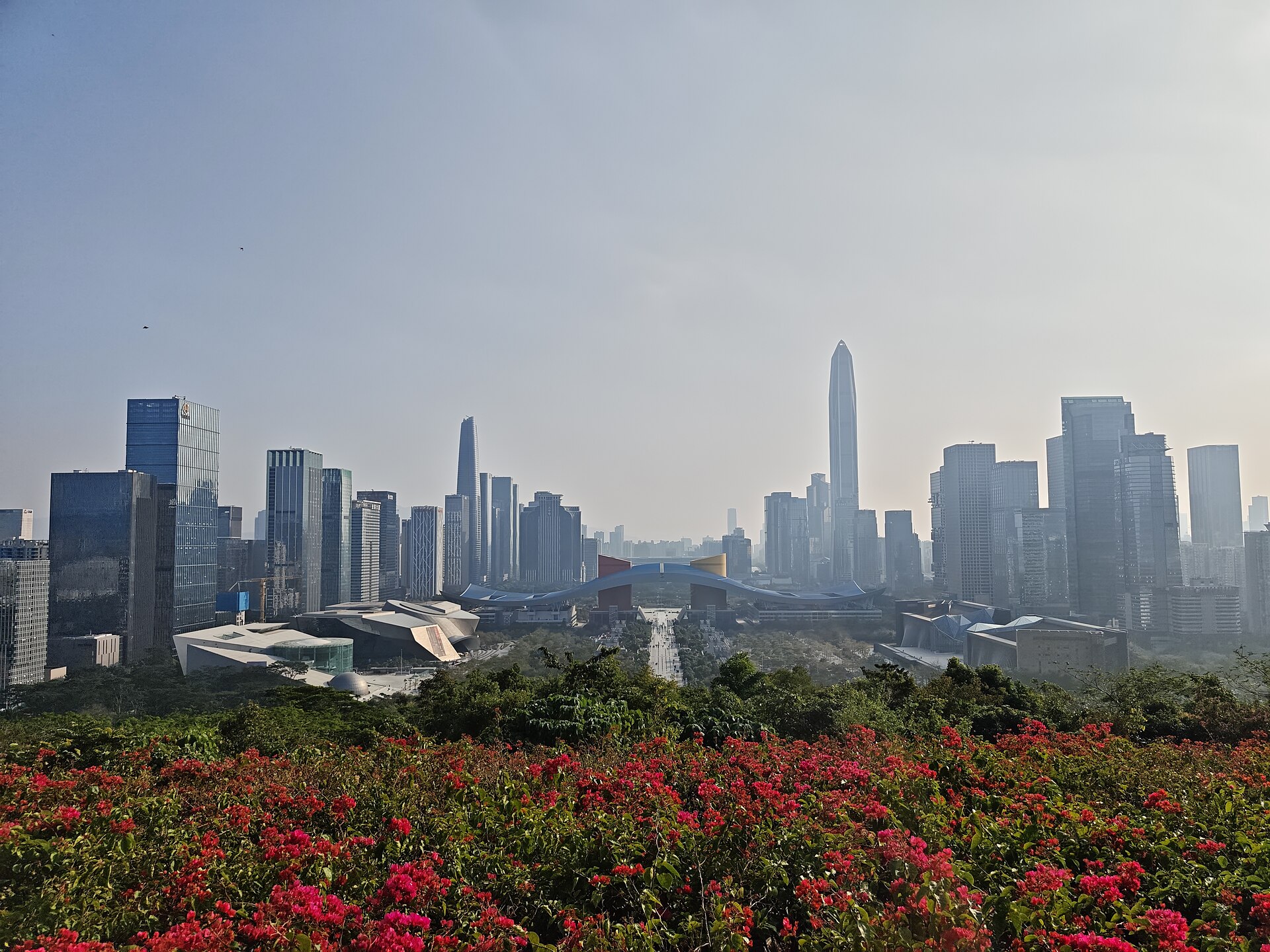
China’s year as host of the Asia-Pacific Economic Cooperation forum is in its final stretch, with APEC’s 21 member economies due to meet in Shenzhen for the 33rd APEC Economic Leaders’ Meeting on November 18 and 19. Much of the year’s trade work is already agreed in writing. The document Beijing calls the main prize, a Shenzhen leaders’ declaration, is not, and it needs every member’s agreement.
The theme and the calendar
Senior officials meeting in Shenzhen on December 12, 2025 approved China’s proposed theme, “Building an Asia-Pacific Community to Prosper Together,” and three priorities: openness, innovation and cooperation, Xinhua reported. President Xi Jinping had announced at the handover ceremony in Gyeongju, South Korea, on November 1, 2025 that Shenzhen would host the leaders’ meeting, according to the official APEC China 2026 site. It is the third time China has hosted the leaders, after Shanghai in 2001 and Beijing in 2014.
Foreign ministry spokesperson Guo Jiakun gave the summit dates on December 12, 2025, the day the Shenzhen meeting approved the theme, and said the leaders’ meeting would be accompanied by the APEC CEO Summit and a joint meeting of foreign and trade ministers, according to Xinhua. Senior officials have since met in Guangzhou, Shanghai and Dalian. The China Council for the Promotion of International Trade said on September 10 that the CEO Summit will run from November 17 to 18 and bring together around 1,000 political and business representatives, Xinhua reported. Hong Kong hosts APEC finance ministers on October 20 and 21, as TockHK has reported.
Opening the Dalian meeting on August 27, Deputy Foreign Minister Ma Zhaoxu said more than 300 meetings and events had been held in more than 10 Chinese cities, with close to 7,000 participants, according to the foreign ministry’s transcript.
What is already agreed
Trade ministers meeting in Suzhou on May 22 and 23, chaired by Commerce Minister Wang Wentao, reaffirmed a commitment to regional economic integration “in a manner that is market-driven,” including through work on the Free Trade Area of the Asia-Pacific, known as FTAAP. They welcomed an APEC Roadmap for Innovative, Competitive and Resilient Services, meant to identify and reduce barriers to services trade, and said the World Trade Organization “needs meaningful reform,” the Suzhou Statement says. Digital ministers followed in Chengdu on July 23 with a joint statement on digital connectivity, artificial intelligence and digital skills, APEC said. Ma counted these among the year’s “early harvests.”
What is still open
“The Shenzhen Declaration will be the most important outcome of the Economic Leaders’ Meeting,” Ma told senior officials in Dalian, adding that China was drawing up the draft and would circulate a zero draft in late September. No public statement has said whether it went out on schedule. He said a standalone statement on FTAAP would be prepared, a concept note on connectivity cooperation had been circulated, and outcome documents on AI and the digital economy would be drafted. In May he had said China wanted the declaration to set out “a road map toward an Asia-Pacific community.”
None of those drafts was posted on the APEC China 2026 documents page as of October 6. APEC decisions “are reached by consensus and commitments are undertaken on a voluntary basis,” the forum says, so the final wording, particularly on FTAAP, depends on what all 21 economies, including the United States, will accept. After Xi’s state visit to Washington in September, the White House said the two countries “will support each other as respective hosts of G20 and APEC, with both leaders intending to attend each other’s Summit,” in a fact sheet. Intending to attend is not agreeing to a text.
Why it matters for Hong Kong
Hong Kong sits at the table as “Hong Kong, China”. In Suzhou, Secretary for Commerce and Economic Development Algernon Yau said Hong Kong fully supported the national effort to develop an FTAAP document, and linked it to the city’s bid to join the Regional Comprehensive Economic Partnership, saying he looked forward to RCEP setting up an accession working group for Hong Kong within 2026, his bureau said. An FTAAP statement in Shenzhen would not by itself decide that bid. The test in November is whether the declaration and FTAAP text commit members to concrete steps or restate aims APEC has carried for two decades.