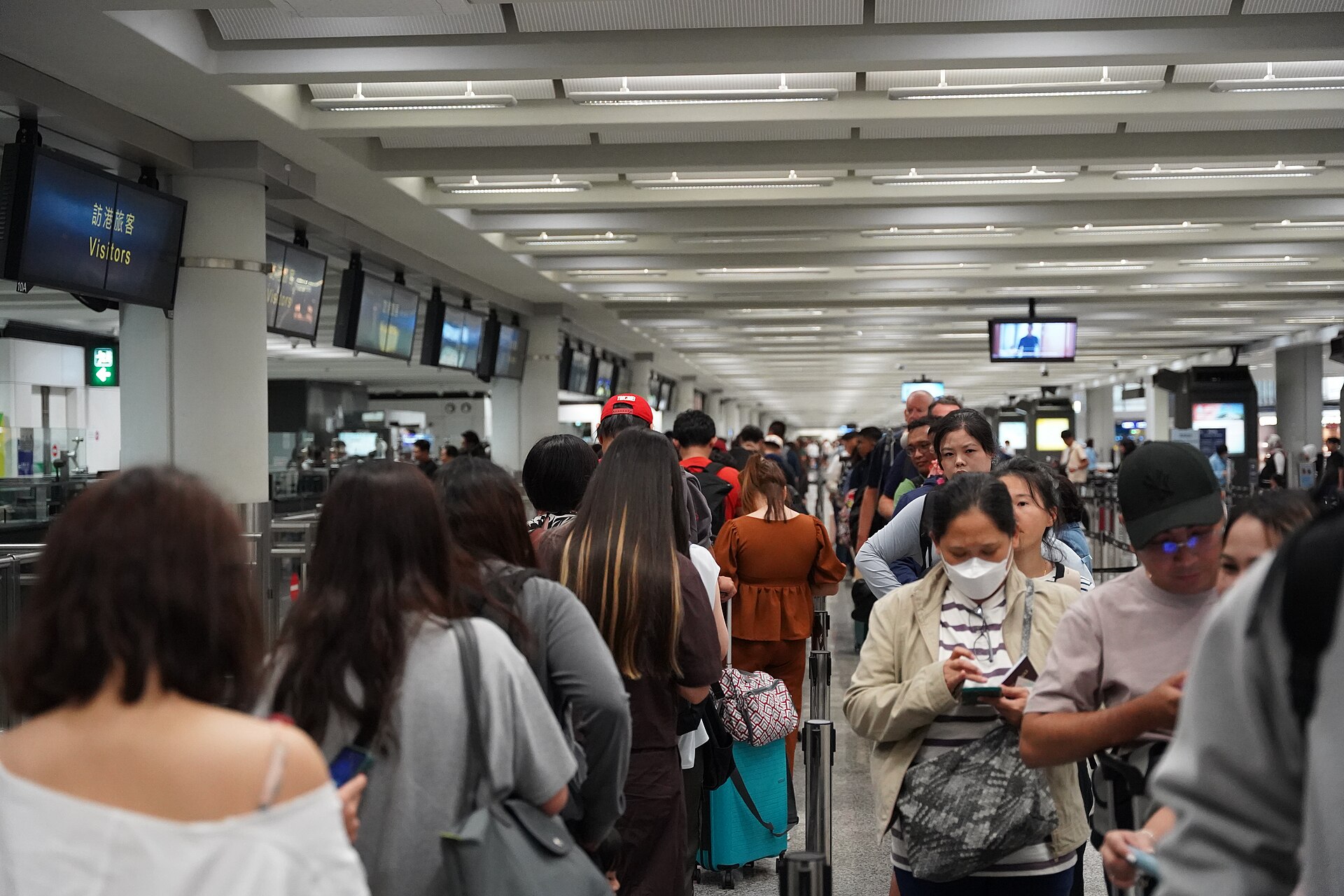
Hong Kong is one of five APEC economies that announced in late August that holders of the APEC Business Travel Card will be able to stay for up to 90 days per visit, up from 60. Each economy will set its own start date, and six weeks later Hong Kong has not announced one.
The announcement was made at the second 2026 meeting of APEC’s Business Mobility Group, held in Dalian on August 23 and 24 with visa and immigration officials from 20 APEC economies. There, the People’s Republic of China; Hong Kong, China; Indonesia; the Philippines; and Singapore “jointly announced that the maximum period of stay for APEC Business Travel Card holders in the aforementioned economies would be extended from 60 days to 90 days,” China’s Ministry of Foreign Affairs said on August 27. The next sentence of the ministry’s statement carries the caveat: “The specific implementation time shall be determined by the relevant economies.”
What the card does
Successful applicants from fully participating economies receive a five-year card that serves as the entry authority to other fully participating economies “which have granted pre-clearance for short-term business travel of up to 60 or 90 days,” according to APEC, and it gives access to fast-track immigration lanes at major airports. Nineteen economies participate fully. Canada and the United States are transitional members that provide the fast lanes but no reciprocal entry. Because each fully participating economy reviews every application, processing takes at least two to three months, APEC says.
In Hong Kong, the Immigration Department runs the scheme. An applicant must hold a Hong Kong permanent identity card and a valid national passport, must never have been convicted of a criminal offense or been refused entry to a participating economy, and must be a bona fide business person who travels frequently on short visits. Applicants may nominate up to five economies for priority processing, and card holders arriving in Hong Kong may use “resident” counters where available.
Two limits Hong Kong residents should know
The department’s rules carve out two exceptions. The arrangement does not apply to Chinese citizens of Hong Kong entering the mainland, who must keep using the Mainland Travel Permit for Hong Kong and Macao Residents, known as the Home Visit Permit. Nor does it cover Hong Kong card holders entering Chinese Taipei. A longer mainland stay for card holders would therefore not change anything for Hong Kong’s Chinese citizens crossing the boundary. Hong Kong’s own extension, once in force, would matter most to card holders from other participating economies coming to the city.
As of October 6, the department’s card page, last revised on November 19, 2025, still described the card as good for multiple visits “of two to three months” to participating economies and said nothing about 90 days. TockHK found no Hong Kong government notice setting a start date. Until one appears, a company planning a stay longer than 60 days in Hong Kong on the card is relying on a commitment, not a rule in force.
Why Hong Kong is named separately
Hong Kong has taken part in APEC since 1991 and continued after 1997 as a separate and full member under the name “Hong Kong, China,” the Trade and Industry Department says, which presents that status as underlining the city’s autonomy in external trade and economic matters. That is why it appears in the Dalian announcement alongside China rather than within it. APEC’s eligibility rules also let Hong Kong issue cards on the basis of permanent residence rather than nationality. APEC decisions are reached by consensus and its commitments are non-binding, the trade department notes, so the longer stay depends on each government changing its own entry practice.
What to watch
APEC trade ministers in Suzhou in May welcomed the forum’s work on the card and said they “encourage fully participating economies’ uptake and acceptance of the virtual ABTC,” in their joint statement. APEC finance ministers meet in Hong Kong on October 20 and 21, but the topics Chief Executive John Lee listed for it on October 6 did not include business travel. The signal that matters is an Immigration Department notice giving a date.