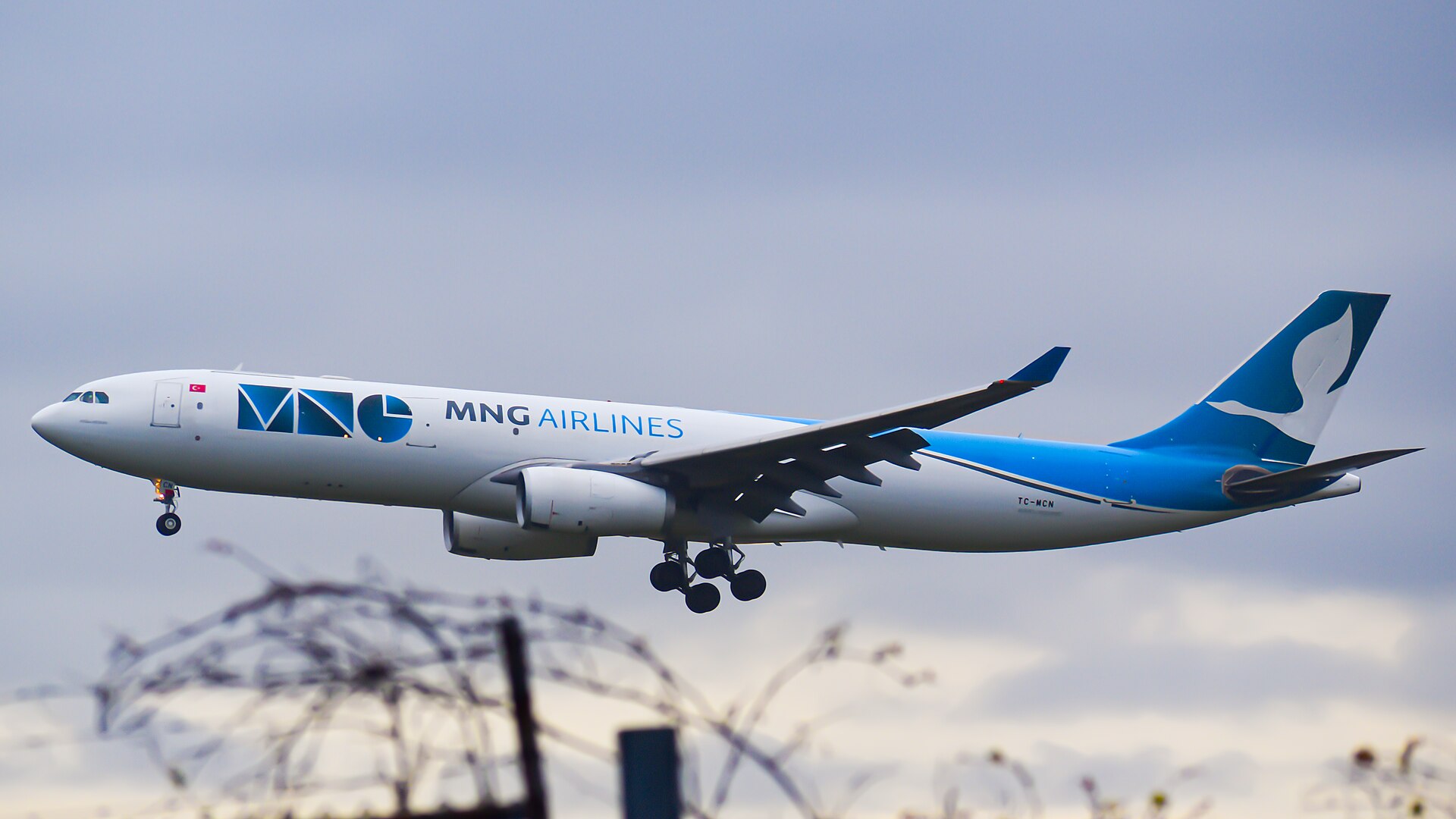
Airport Authority Hong Kong announced two separate aviation agreements on September 9, 2026, involving a Turkish cargo carrier and airport development in Uzbekistan. For freight buyers, the useful distinction is between a cooperation framework and capacity they can actually book.
Hong Kong cargo connectivity has another pair of institutional links to build on. At the Belt and Road Summit on September 9, Hong Kong International Airport exchanged a signed memorandum of understanding with MNG Airlines, while its consultancy business signed a separate agreement connected to development of Navoi International Airport in Uzbekistan.
According to Airport Authority Hong Kong’s announcement, MNG was operating between eight and ten freighter flights a week between Turkey and Hong Kong and aimed to increase frequencies. That establishes an existing service relationship and a stated ambition. The announcement does not provide a confirmed additional-flight timetable.
MNG Airlines: cooperation is not a capacity guarantee
The MNG memorandum covers air connectivity, operational performance and service quality, management knowledge, sustainability and training. Those subjects extend beyond simply adding flights. They give the two parties a framework for closer work without, in this release, specifying additional bookable capacity.
Tock’s analysis is that forwarders should watch for a published operating schedule, cargo acceptance details and firm commercial terms before treating the agreement as a new routing option. An ambition to increase frequency is useful context for network planning; it is not a substitute for an airline’s booking confirmation.
The distinction matters even when an existing service is involved. More departures, if introduced, might widen scheduling choices. Whether they improve a particular shipment’s journey would still depend on connections, handling requirements and the service actually offered. None of those shipment-level outcomes can be inferred from the memorandum alone.
Navoi airport: a separate development agreement
The Uzbekistan agreement was signed by Hong Kong International Airport Consultancy Limited and Harvest Epoch Strategic (International) Investment Limited. The airport authority says the cooperation aims to advance Navoi International Airport’s development using Hong Kong’s airport management and operating expertise.
This is not the same document as the MNG memorandum, and the counterparties are different. The release does not establish a new Hong Kong to Navoi freighter service, or a combined Turkey-Uzbekistan-Hong Kong cargo product. Reading the two announcements as one newly opened transport corridor would go beyond the evidence.
For a regional supply-chain planner, the consultancy link is best treated as a development to monitor. Operational milestones, a defined service proposition and actual carrier schedules would be more useful inputs to a routing decision than the signing ceremony itself.
Hong Kong cargo connectivity: ask what changed for the shipment
The commercial question is not whether the agreements sound ambitious. It is whether they eventually change the choices available to a shipper. That could mean a frequency increase, a workable connection or a more predictable handling arrangement, but each would require evidence beyond the current announcement.
Tock would track the two initiatives separately: airline service changes on one side, airport-development milestones on the other. Keeping separate scorecards makes it harder to mistake progress in a consultancy relationship for progress in freight capacity.
This analysis relies on the airport authority’s account of the September agreements. It does not claim independent confirmation of MNG’s operating schedule after that announcement, and the reported flight frequency should not be used as a live timetable.
Hong Kong has added relationships. The next test is whether those relationships produce a service the cargo desk can sell.