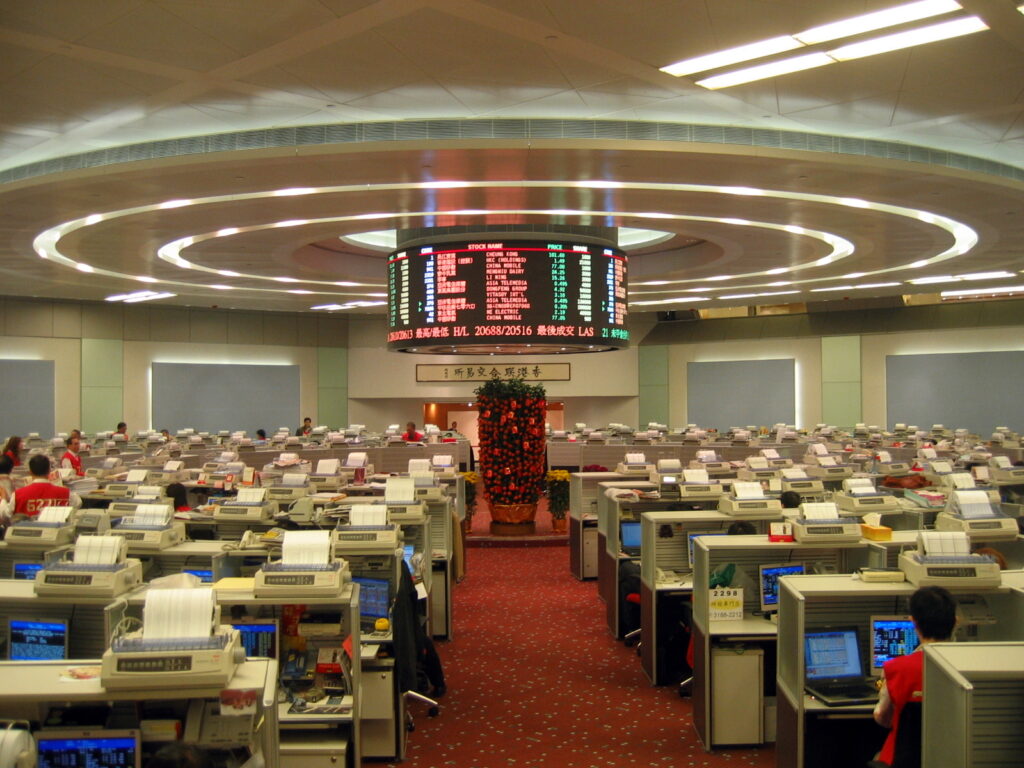
Hong Kong Exchanges and Clearing’s third-quarter profit edged lower as trading volumes pulled back from the record pace set earlier in the year, though the exchange operator’s results for the first nine months of 2026 remain the best ever for that period.
Profit attributable to shareholders was HK$4,859 million in the quarter ended September 30, about 1% below the same quarter last year, according to HKEX’s results announcement. Revenue and other income rose 1% year on year to HK$7,867 million, but fell 7% from the record second quarter. Basic earnings per share were HK$3.84.
The quarter’s main pressure point was volume. Headline average daily turnover on the Stock Exchange fell 11% year on year to HK$254.2 billion, and 12% from the second quarter. Southbound turnover under Stock Connect dropped 30% year on year to HK$107.3 billion, and stock options volume fell 11%. Lower cash-market and Southbound trading and clearing fees, along with lower net investment income from margin funds — a result of higher rebates to clearing participants — dragged on the core business.
Those declines were largely offset by strength elsewhere. Northbound trading rose 15% year on year to RMB309.7 billion in average daily terms, commodities volumes on the London Metal Exchange climbed 12%, and listing fees were higher. Core business revenue was essentially flat at HK$7,467 million. Net investment income from corporate funds rose to HK$353 million from HK$254 million a year earlier, though it fell sharply from the second quarter, which had included HK$290 million in non-recurring valuation gains on unlisted equity investments.
Operating expenses rose 8% year on year on higher staff and information technology costs, pushing the EBITDA margin down two percentage points to 79%.
Records despite the dip
The softer quarter did little to dent the year-to-date picture. Chief Executive Bonnie Y Chan pointed to “record nine-month revenue and other income and profit,” supported by what she called strong activity across cash, derivatives and commodities markets. In the announcement she described the current period as “a defining moment for Hong Kong’s markets” as global investors reassess capital allocation, and said HKEX is responding through listing reforms, infrastructure upgrades and new products.
The quarter itself was busy on the strategic front. HKEX launched five-year China Government Bond futures — the only exchange-traded CGB futures contract listed offshore — and said it would accept CGBs, policy bank bonds and Ministry of Finance bonds as collateral from November. It implemented the first phase of a slimmer board-lot framework and a second phase of minimum-spread reductions, published consultation conclusions on the first phase of its Listing Framework Competitiveness Review with new rules effective immediately, and opened a second-phase consultation on post-listing requirements. Bursa Malaysia was added as a recognised stock exchange, and Chinese mainland insurance funds were permitted to buy Hong Kong ETFs through Southbound Stock Connect.
Market reaction
The results landed below some expectations. According to BigGo Finance, the profit figure came in slightly under a market consensus of about HK$5.03 billion, and the stock fell more than 3% in afternoon trading before closing down roughly 2% at HK$384.4. Those figures could not be independently confirmed against the official announcement, which does not include share-price or consensus data.
The quarter-on-quarter slowdown frames the challenge for HKEX heading into year-end: the exchange’s fee base remains sensitive to turnover, and the second quarter’s record volumes were always unlikely to hold. But the nine-month numbers — and a steady run of structural initiatives, from listing reforms to RMB-related products — suggest management is betting on deepening the market rather than riding a volume cycle.