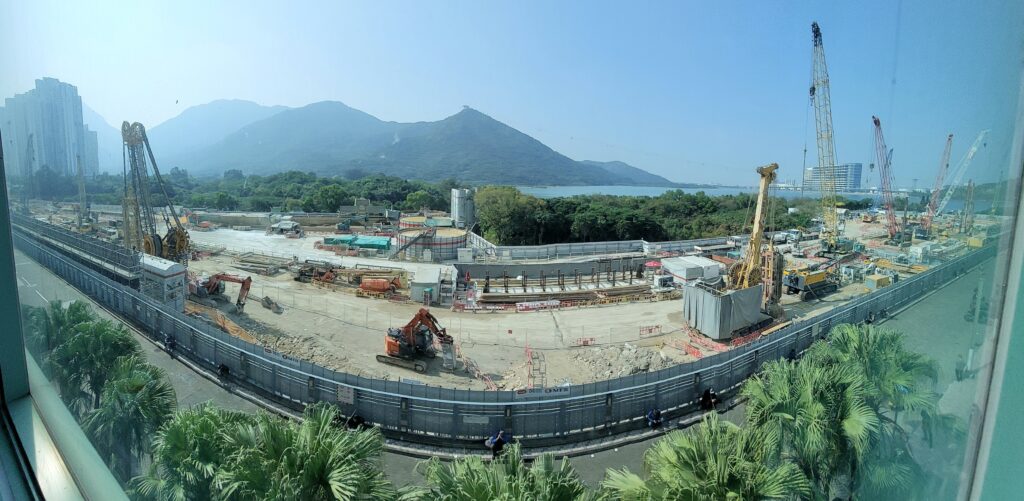
Hong Kong’s Buildings and Highways departments are pressing MTR Corporation for answers after roughly 30 defective concrete pillars were found at the platform level of the under-construction Tung Chung West station, part of the Tung Chung Line extension.
The Highways Department said it received a report from MTR on November 2 flagging construction quality problems in some platform-level pillars and that the contractor had attempted repairs using an unapproved method. MTR immediately stopped the works, according to the department’s account. Department officers inspected the site on November 3 and 4 and met with MTR on Friday to follow up. The department has required MTR to submit a detailed investigation report within two weeks, to press the contractor to draw up a remediation plan and carry out repairs at its own cost, and to take steps to keep the incident from affecting the overall schedule. It also said the 2029 opening target for the extension remains unchanged.
The Buildings Department laid out its own timeline. The registered structural engineer on the project found a defective pillar in early October and required the contractor to rectify it; because it posed no immediate danger, the engineer was not required to report it right away. During a routine inspection and quality audit on October 27, department officers confirmed two defective pillars and ordered a full investigation and rectification. More pillars with similar defects turned up as formwork was progressively removed, and the engineer reported the findings to the department on November 3. As of November 6, about 30 pillars had been found defective.
The department said the station is built using the top-down method, with temporary supports for the floor slabs not yet removed, so the defects do not endanger the structure. Those supports can only come out once the engineer’s team is satisfied with the relevant works. A preliminary review found no evidence of deliberate deviation from approved plans and no violations by the personnel handling the follow-up, the department said. It has required the engineer to submit an investigation report and proposed remedial measures by mid-November and will keep monitoring the corrective works.
MTR said its patrols discovered unauthorized repair work on top of some pillars, ordered the contractor to suspend operations at the station, and demanded a rectification plan and a full report before work can resume. MTR stressed the problems pose no structural risk.
Hong Kong Institution of Engineers former chairman Chan Sai-cheong said a gap between the top of a pillar and the ceiling is normally kept during construction and filled with concrete only after floor work is completed. Hong Kong Construction Industry Employees General Union chairman Chau Sze-kit questioned the construction method and said the contractor should have reported construction changes to MTR before carrying out repairs. Both men suggested MTR should release more details.
Under the ownership approach, MTR is responsible for the extension’s design, construction, operation and maintenance, while the Highways Department monitors progress, safety and quality through risk-based inspections. The department said its last inspection in October covered the concourse level and mainly pillars that had not yet been poured — meaning the platform-level defects surfaced outside that sweep.