Singapore’s Parliament on October 6 passed the Financial Services and Markets (Amendment) Bill 2026, which gives the Monetary Authority of Singapore (MAS) the legal power to require its most important banks to hold a minimum level of total loss-absorbing capacity, or TLAC. The power exists on paper once the law takes effect. The law starts on a date the minister appoints by notice in the Gazette, and the levels a bank must actually hold come later, through MAS notification.
What the bill does
TLAC is a cushion of equity and debt that can be written down or converted if a bank fails, so that losses fall on investors rather than taxpayers. Moving the bill’s second reading on behalf of Deputy Prime Minister Gan Kim Yong, the minister in charge of MAS, Minister of State Alvin Tan said domestic systemically important banks “will be required to hold additional eligible loss-absorbing instruments and other financial resources,” according to the speech MAS published.
MAS can already bail in subordinated creditors of a distressed institution under the Financial Services and Markets Act 2022. The new requirement is meant to complement that power, Tan said. According to MAS’s explanatory brief from the September 8 first reading, the bill inserts a new Division 3 in Part 7 of the 2022 Act, letting MAS impose TLAC requirements on “Division 6 financial institutions.” Institutions that are notified must keep a minimum level of TLAC.
The bill also makes what Tan called technical amendments to match updated Financial Action Task Force standards on proliferation financing, the funding of weapons of mass destruction. The amendments state expressly that MAS supervision covers proliferation financing risk alongside money laundering and terrorism financing, and that MAS may help domestic and foreign authorities supervise that risk.
Which banks are in scope
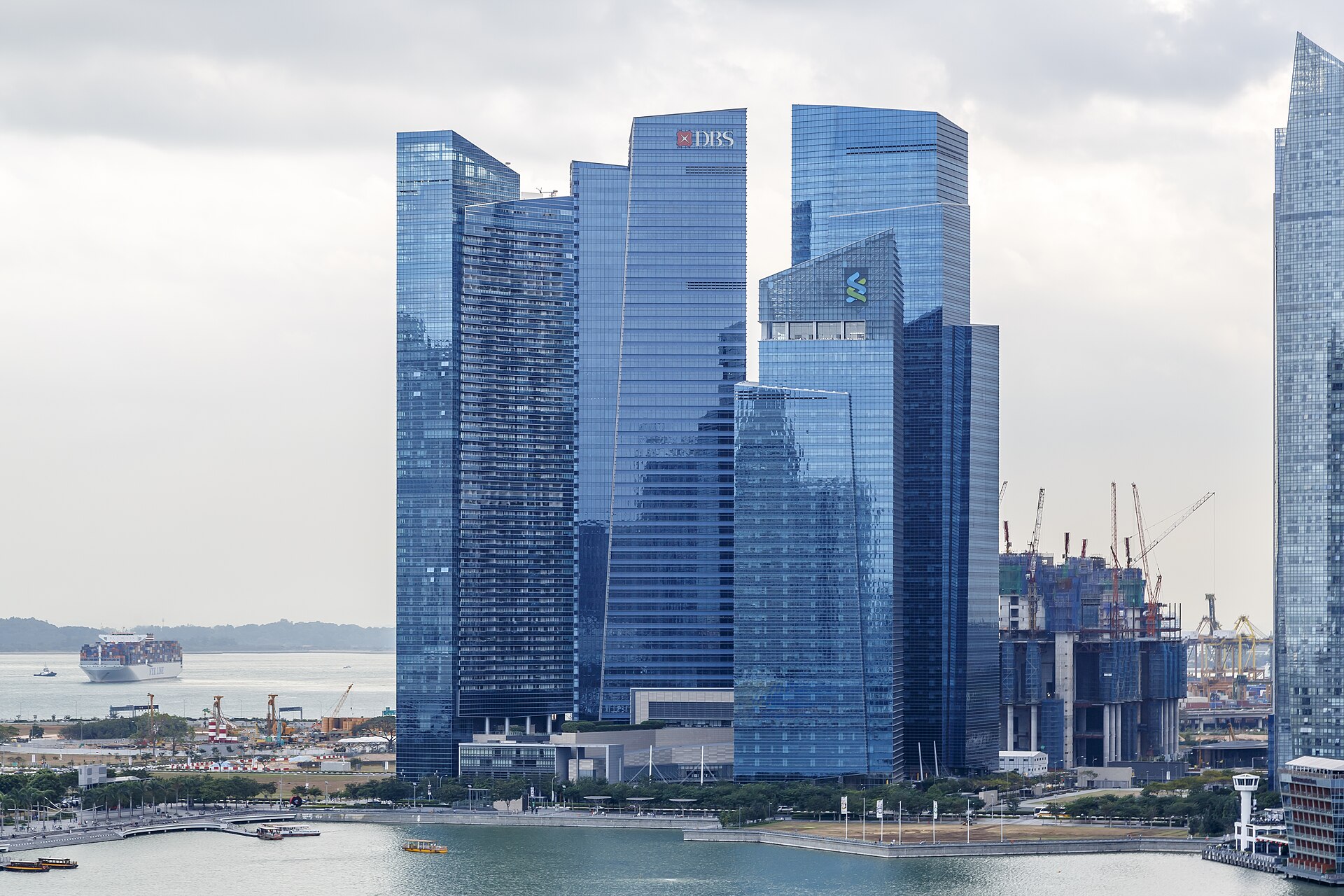
Tan did not name the banks in his speech. CNA reported that the domestic systemically important banks covered are DBS, OCBC, UOB, Citibank, Maybank, Standard Chartered and HSBC, three local and four foreign. Two of those groups own banks that issue Hong Kong’s banknotes: The Hongkong and Shanghai Banking Corporation and Standard Chartered Bank (Hong Kong) are two of the city’s three note-issuing banks, so their capital planning in Singapore is of direct interest here.
Tan said the banks “remain well-capitalised, well-managed,” and described the framework as part of MAS’s work to strengthen its resolution regime “in the unlikely event of a distressed DSIB.”
What is still open
The statute is only the enabling step. The bill text says the act “comes into operation on a date that the Minister appoints by notification in the Gazette.” No commencement date had been published by October 7.
The detailed requirements were proposed in a MAS consultation that ran from May to June 2026, according to the explanatory brief. Tan said the consultation covered the level of TLAC banks must keep, which instruments qualify, what banks must disclose and the implementation timeline. A law firm summary of that paper by Allen & Gledhill said MAS proposed external TLAC for the local banks, internal TLAC for the foreign banks’ Singapore operations, a ban on counting instruments sold to retail investors in Singapore, and five years from notification to comply. Those were proposals. MAS said comments were incorporated “where appropriate,” and it has not yet published final figures alongside the passed bill.
Why it matters
TLAC began as a Financial Stability Board standard for global systemically important banks, meant to let a failing bank be resolved without exposing public funds. Applying a version of it to domestic systemically important banks is a national choice, and Singapore is now making it. For investors, the practical effect is likely to be new issuance of debt designed to absorb losses, priced for that risk. For the three local banks, the cost depends on calibration and on how much of their existing capital already qualifies. Neither is settled by the vote.
The October 6 vote settles who holds the power. The levels, eligible instruments and the clock will be set when MAS acts under it. TockHK will follow when MAS issues its final TLAC framework or a commencement notice appears in the Gazette.