By TockHK Editorial Draft Writer
A personal scandal involving Nvidia chief executive Jensen Huang has put fresh attention on a question Washington has wrestled with for years: how China keeps getting the company’s most advanced chips despite US export controls.
Huang has admitted to having an affair, reportedly with a Chinese executive at a Singapore-based company the United States suspects of smuggling AI microchips into China. The suspicion remains an allegation, not an established fact, but it has drawn scrutiny to the channels Chinese firms use to obtain hardware Washington has tried to cut off.
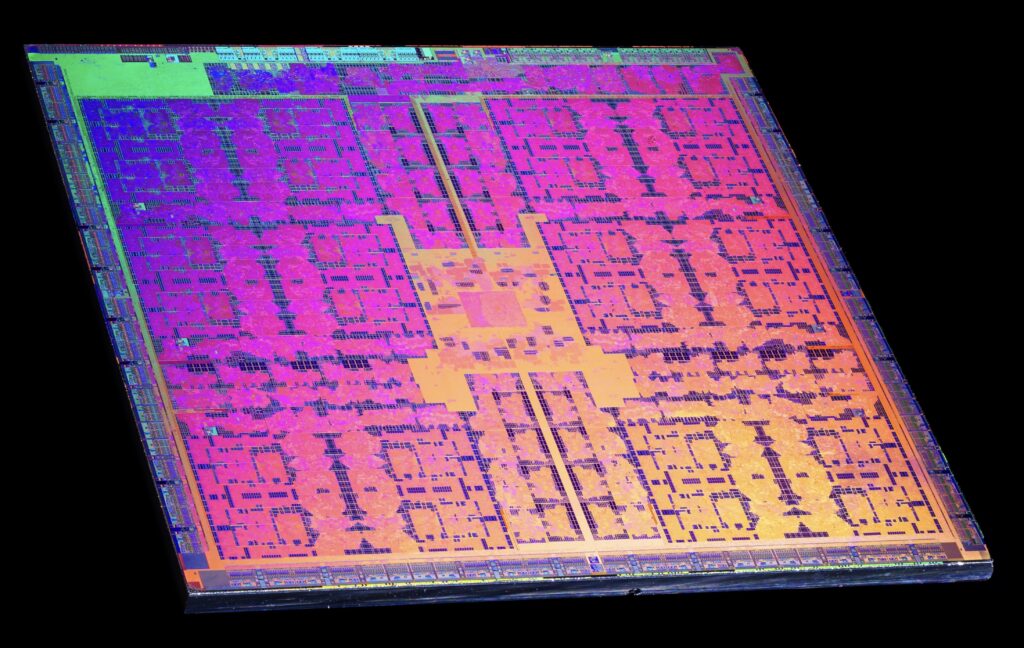
Nvidia’s Graphics Processing Units, originally built to render 3D visuals in video games, turned out to be ideal for the massive data-crunching required to train and run artificial intelligence. After ChatGPT’s launch in 2022 set off an investment race, orders poured in and Nvidia’s market value climbed to $4.5 trillion, putting it on par with Apple as the world’s two most valuable companies.
Washington bans exports of Nvidia’s top-end “Blackwell” and “Rubin” GPUs to China, citing security concerns because advanced AI has military applications. Huang has lobbied to loosen the rules, warning that restrictions are fueling the rise of competitive Chinese alternatives. This year, Washington eased controls on the previously banned, less powerful H200 chip, with the US government taking a 25 percent cut of sales. But the conditions attached have made shipments hard to approve, and Beijing is reportedly reluctant to buy H200s anyway as its own chip industry gains momentum.
Meanwhile, Chinese startups including Moonshot AI, Z.ai and DeepSeek have released high-performing models that have turned up the heat on US rivals.
“Chinese vendors are still using cutting-edge Nvidia chips to train their models” despite the controls, said Lian Jye Su, a chief analyst at Omdia.
Analysts describe two main routes. One is smuggling. The other is a rental loophole: Chinese firms can buy computing power at data centers in third countries — often in Southeast Asia — that are stuffed with Nvidia chips.
“US export controls restrict where a chip is shipped, not who uses it,” said Stephen Wu, founder of the Carthage Capital investment fund. Nvidia GPUs can sit in Malaysia’s Johor region, for example, “in full compliance while a customer in Shenzhen logs in,” Wu said.
Tech outlet The Information reported in December that DeepSeek developed its new model using thousands of chips dismantled overseas and brought into China. DeepSeek did not respond to a comment request at the time, and Nvidia told The Information it had not seen evidence of such smuggling, calling the claim “far-fetched.”
White House adviser Michael Kratsios said this summer that Moonshot AI had accessed high-end Nvidia chips in Thailand. Washington has also accused Chinese AI labs of training systems to mimic the capabilities of US models — another allegation, not a proven charge.
Chinese chips are closing the gap, slowly. Huawei is China’s top Nvidia competitor, though it still lags behind, and DeepSeek will reportedly train its next major AI model on Huawei chips. Huawei said in September that its next-generation AI chip would be ready in the first quarter of 2027, three quarters earlier than planned.
“Nvidia chips still make top-level AI work faster and easier, but they are no longer the only path,” said Poe Zhao, founder of the analysis publication Hello China Tech. “The open question is cost,” Su said, noting that training on Chinese chips usually takes more time and more engineering. “Chinese-made chips are improving fast,” he added, with more collaborations likely to come.