Receipts attached 4 sources
Sources
-
Other source
Community Pharmacy Programme pairing and Co-care fee announcement
Rollout, eligibility, drug-payment distinction and consultation-fee summary
-
Other source
List of 20 first-phase community pharmacies
Names, addresses and district count
-
Other source
Co-care Network consultation co-payment list
Service-point fee schedule effective November 1
-
Other source
Hong Kong Christian Service survey reported by on.cc
Responses among surveyed adults aged 55 or older; selection method not reported
Limits
The pairing process is planned to start by the end of October, not confirmed live at every listed site. Co-care Network pharmacy drug co-payments are not yet published. November 1 consultation fees are a separate measure. The Hong Kong Christian Service survey is reported by on.cc for 492 respondents aged 55 or older; sampling method and margin of error were not given.
Corrections
No correction notes have been added for this article.
Patients will be invited to pair with designated pharmacies in four districts. Separately, treatment consultation co-payments will change at some Co-care Network service points on November 1.
Hong Kong community pharmacy pairing is due to begin by the end of October at 20 designated locations, the Health Bureau said Friday. Patients should not assume they can simply walk into one of those pharmacies under the new program: participating doctors will be invited in phases, followed by invitations to eligible patients to enroll and choose a pharmacy. A separate change to Primary Healthcare Co-care Network consultation co-payments takes effect November 1. The bureau announced the two measures together, but the new consultation fees are not the still-unpublished drug co-payments for pharmacy users.
Where the community pharmacy pairing begins
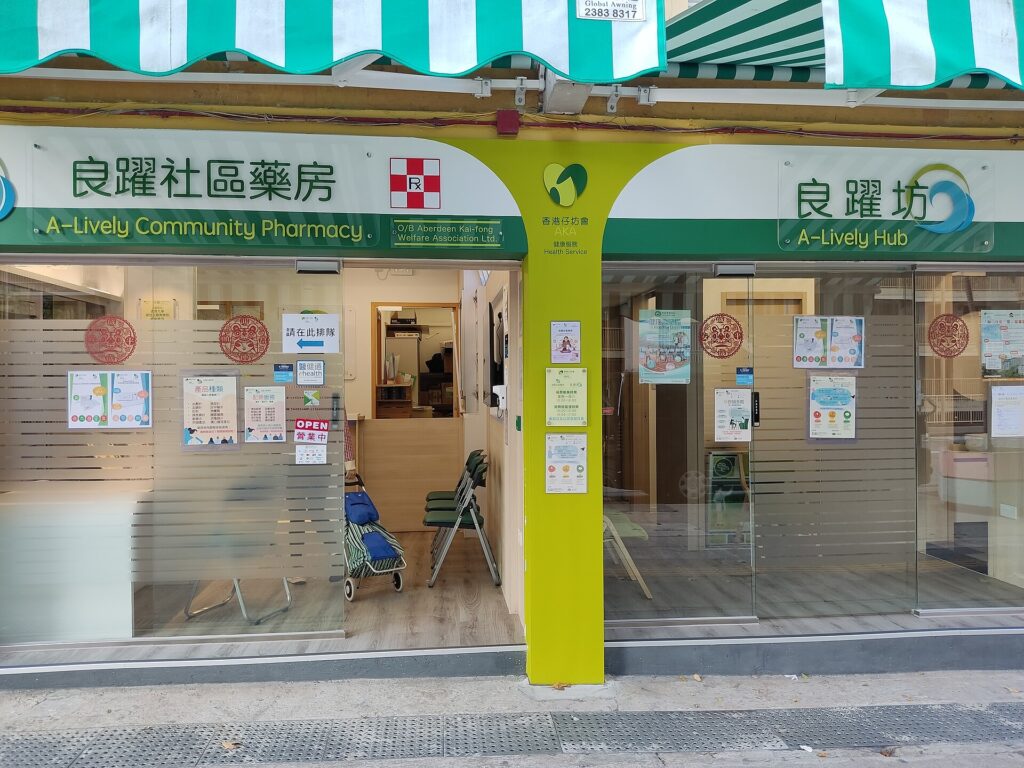
The first phase covers Eastern, Yau Tsim Mong, Sha Tin and Yuen Long, with five pharmacies in each district. The bureau’s dated list names all 20 sites and their addresses. They include locations in Taikoo Shing and North Point; Mong Kok and Tsim Sha Tsui; Yuen Long and Tin Shui Wai; and Ma On Shan, Sha Tin and Tai Wai. The list includes Mannings, Watson’s and one St. James’ Settlement community pharmacy in North Point. Being on the list does not by itself establish that a pharmacy can serve every patient immediately.
The initial invitation process is for designated family doctors in the Co-care Network and patients of those doctors, as well as patients of Hospital Authority Family Medicine Clinics. Once paired, a patient will be able to obtain prescribed drugs from the chosen pharmacy and receive medication counseling and related advice, according to the bureau. The announcement does not give an exact first day for each pharmacy or say that all eligible patients can enroll at once. Patients should wait for the invitation and dispensing instructions applicable to them before changing where they collect medication.
The government plans a second phase in Southern, Wong Tai Sin, Kwun Tong, Tuen Mun, North and Tai Po, followed by a third phase in the eight remaining districts. It says the program will reach all 18 districts in the fourth quarter of 2027, with more pharmacies invited later. That is a rollout plan, not a claim that the future sites are already operating.
What patients will pay at the pharmacy
The bureau says Co-care Network participants using the community pharmacies will pay drug co-payments under a Community Drug Formulary. Hospital Authority patients’ drug fees will continue to follow the authority’s prevailing fee schedule. It has not yet published the formulary details or a table showing what Co-care patients will pay for individual drugs under the new arrangement. The 20-site list is therefore a location guide, not a pharmacy price list.
That missing price information matters to patients weighing a new pickup location. In a separate survey reported by on.cc on Thursday, Hong Kong Christian Service said 72.8% of 492 respondents aged 55 or older named drug and service prices as their leading concern about community pharmacies. The report also said 58.5% had forgotten or missed a medication dose during the previous year, and 76.8% wanted a registered pharmacist on site throughout service hours. Those are responses from the people interviewed, not estimates for all older Hong Kong residents: the published account does not explain how the respondents were selected or provide a margin of error. The organization has advocated broader pharmacy services, including allowing health care vouchers to cover pharmacists’ fees.
Which consultation co-payments change November 1?
The November 1 adjustment concerns the Co-care Network’s consultation co-payments for screening and treatment, not the community pharmacy drug charge. The Health Bureau says 1,022 of the network’s 1,239 participating service points will keep their treatment-phase consultation fee unchanged. Another 28 will lower it, with a median reduction of HK$100, while 189 will raise it. Nearly 90% of the increases will be HK$50 or less, according to the bureau. Those three groups add up to all 1,239 service points; “service points” should not be read as a count of individual doctors.
The median treatment-phase co-payment will remain HK$150, and 773 service points will charge that amount or less, the bureau says. It describes the overall rate of increase in treatment consultation co-payments as 3.7%, but that aggregate does not tell a patient what a particular clinic will charge. Participating doctors can set their own fees under the program’s rules. For screening, the co-payment cannot exceed HK$120 for cardiovascular risk-factor screening or HK$180 for chronic hepatitis B screening.
Patients can check the published November 1 co-payment list for their service point. The PDF says it was updated October 8 and directs readers to the network’s doctor search page on November 1 for the latest list, so a patient planning an appointment should verify the specific clinic’s fee then. For Co-care Network questions, the government gives 2157 0500; for the community pharmacy program, 2525 2328. The bureau says both hotlines are staffed from 9 a.m. to 9 p.m., Monday through Saturday.