Receipts attached 7 sources
Sources
-
Other source
1823 to study adding overnight staff after monkey call
Quotes Digital Policy Office account of call records and staffing review
-
Other source
Sham Shui Po monkey and hotline calls
Witness account of Sunday sighting, 999 routing and SPCA attendance
-
Other source
AFCD guidance about monkeys
1823 for monkey reports; 999 for emergencies
-
Other source
1823 Contact Centre operations
24-hour service, 23 participating departments
-
Other source
Digital Policy Office AI plans for 1823
2025 volume and AI project scope
-
Other source
Planned 1823 complaint-handling overhaul
Lead-department plan and proposed 10/30-day complaint responses
-
Other source
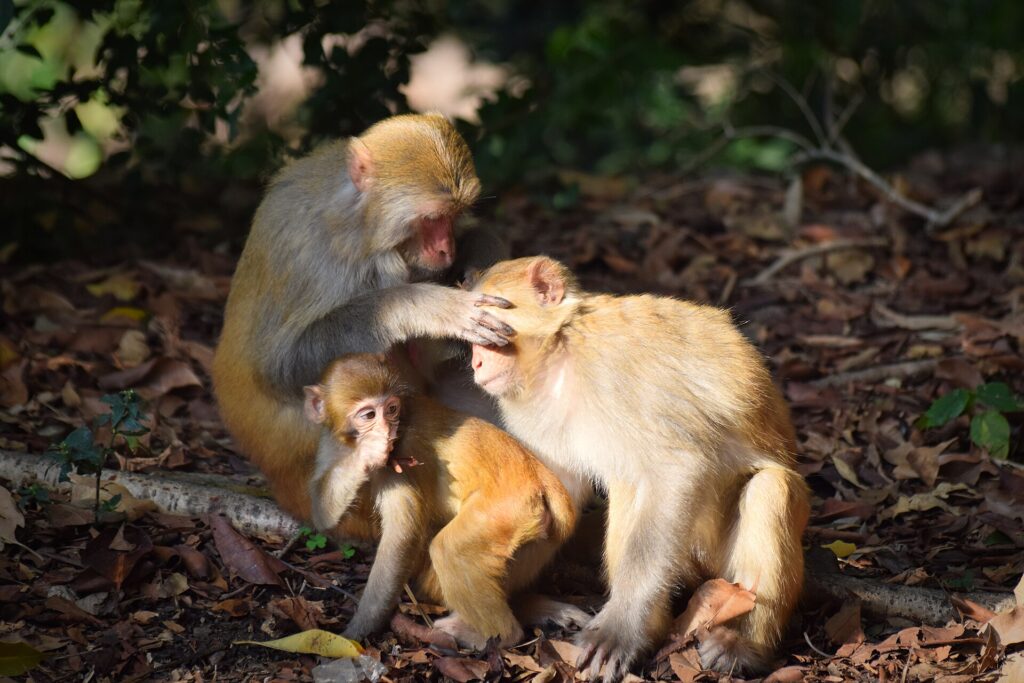
Hong Kong monkeys photograph
Contextual photo; licence and pixels verified

Limits
Witness reports date the sighting to Sunday, October 18; the Digital Policy Office cited calls in its records on Monday, October 19. The discrepancy is unresolved. Witness descriptions of the monkey’s wounds and 999 routing have not been independently confirmed. The image shows other monkeys at Lion Rock Country Park, not the reported animal.
Corrections
No correction notes have been added for this article.
The Digital Policy Office says it will study adding overnight staff to Hong Kong’s 1823 hotline after a call about a badly injured monkey in Sham Shui Po went to voicemail. The caller left no message, so staff did not follow up on that call, the office said.
Two accounts, two dates
According to local reporting, a passer-by saw a young monkey foaming at the mouth near 338 Tai Po Road at about 1.15am on Sunday, October 18. Witnesses described severe wounds to its hindquarters. One caller said the 999 centre directed him to 1823, where he could not get through. Staff from the Society for the Prevention of Cruelty to Animals arrived around 3am, but the monkey escaped up a tree and could not be found.
The Digital Policy Office gave a different date in its account on Monday. Citing 1823 records, it said someone called at 1.56am on Monday about a dying monkey on a slope opposite the PetroChina station at 338 Tai Po Road. An officer logged the report, sent it to the Agriculture, Fisheries and Conservation Department and telephoned its duty officer because the case was urgent.
Another caller rang around 1am on Monday, the office said. All overnight staff were handling other calls, so the call went to voicemail. The caller left no message. The office’s account, as reported, does not explain the difference between its Monday dates and the Sunday sighting described by witnesses.
The office said the episode showed room for improvement. It will review the service and study putting more resources into overnight staffing. It did not announce a staffing increase or a timetable.
A route through two hotlines
The Agriculture, Fisheries and Conservation Department has advised people disturbed by monkeys to report them through 1823, and to call 999 for police help in emergencies. In this case, the first caller said the emergency line sent him to 1823. That is the caller’s account; the Digital Policy Office’s published response did not address the 999 call.
The government says 1823 operates around the clock, answers enquiries about 23 participating departments and passes complaints or service requests to the responsible office. It handled more than 7.5 million enquiries and complaints last year, according to the Digital Policy Office.
The office has also promoted technology as a way to speed up the service. In August it announced AI projects for call summaries, case extraction and prioritising departmental replies. A separate plan to trial AI agents concerns government administrative work. Neither announcement establishes that AI would have answered this overnight call.
The September Policy Address proposed a lead department for complaints involving several agencies. Under the plan described by Deputy Chief Secretary Warner Cheuk, the lead department would give an initial response within 10 days and an actual response within 30. Those targets concern ordinary complaints, not an emergency involving an injured animal.