Receipts attached 13 sources
Sources
-
Other source
APEC Finance Ministers Meeting preliminary arrangements
Hong Kong Convention and Exhibition Centre venue, October 19–21 preliminary arrangements
-
Other source
1997 handover ceremonies
Handover events at convention centre extension
-
Other source
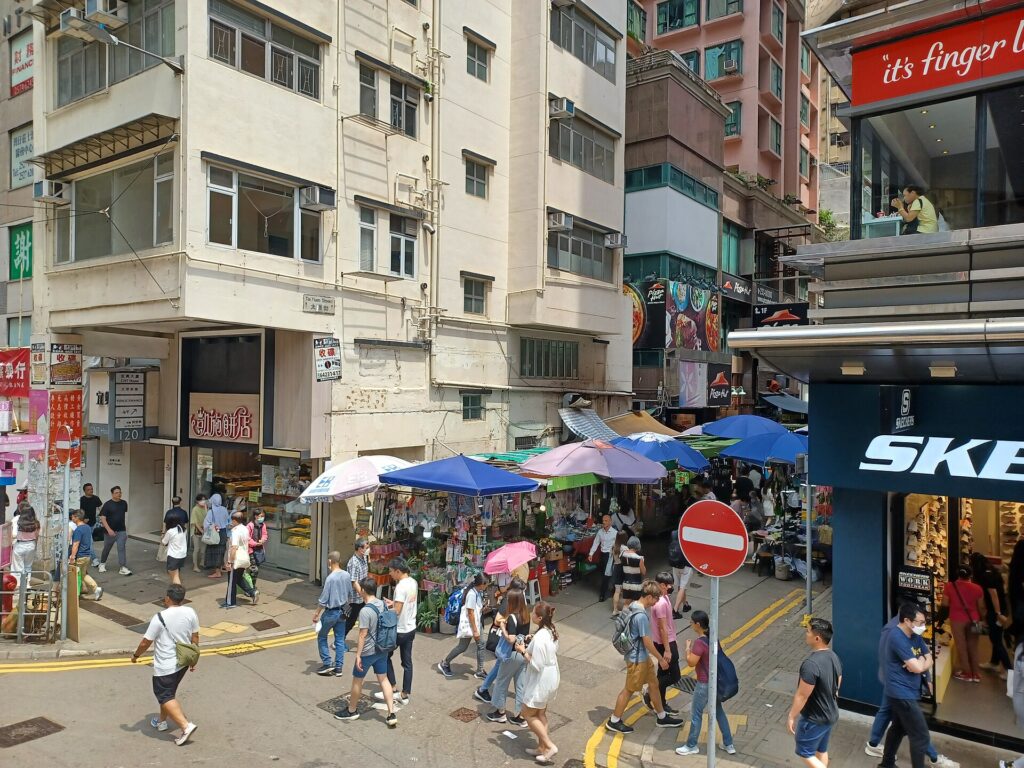
Tai Yuen Street
Toy Street identity
-
Other source
Viva Blue House
Cluster, addresses, Grade I designation, residential and cultural uses
-
Other source
Blue House paint folklore
Leftover-paint account treated only as local lore
-
Other source
Yuk Hui Temple
1863 completion, 1603 statue inscription, location
-
Other source
Pak Tai Festival
Third day of third lunar month
-
Other source
Hung Shing Temple
Queen’s Road East, former waterfront
-
Other source
Lee Tung Street redevelopment
Wedding-card shops and redevelopment
-
Other source
Woo Cheong Pawn Shop heritage
Tenement group and verandah
-
Other source
Woo Cheong restaurant closures
Recent reported closures; no claim of current venue availability
-
Other source
Old Wan Chai Post Office
Oldest surviving post office building and location
-
Other source
Tai Yuen Street photograph
File and CC BY-SA 4.0 license checked; 4000x3000 original; image checked visually

Limits
The blue-paint origin is local lore, not established history. The 2026 APEC meeting schedule was checked before publication; the article does not claim that all 21 member economies are represented by finance ministers. Woo Cheong restaurant operations are volatile, so the story recommends seeing its facade only. The 2023 street photograph is contextual, not a view of this week.
Corrections
No correction notes have been added for this article.
Finance ministers are in town this week, but Wan Chai was never just a place for meetings. It began as a fishing village and has been a shipyard district, a sailors’ bar district and a conference hub. It still has a toy street and a house painted blue.
HONG KONG, October 19, 2026 — On Tuesday, the APEC Finance Ministers’ Meeting opens at the Hong Kong Convention and Exhibition Centre, the waterfront complex where the 1997 handover ceremony took place. It is a very Wan Chai arrangement. The district puts glass towers and big conferences on one side of Gloucester Road and a street full of cheap toys and wet-market stalls on the other, and neither seems to mind the other.
If any delegates slip away for an hour, here is where I’d send them.
Start at Tai Yuen Street
Locals call it Toy Street, because of the toy shops, but the street and the market around it sell almost everything: groceries, flowers, clothes, snacks, household odds and ends. Stalls line both sides and leave a narrow strip down the middle for pedestrians, which gets crowded and loud after work.
Foreign visitors come here to see everyday Hong Kong, and they find it. Come in the early evening, buy something small to eat and watch people shop on the way home from the office.
Look for the Blue House
A short walk away on Stone Nullah Lane stands the Blue House, a four-story tenement dating from the 1920s and now a Grade I historic building. The blue is not a design statement. Local lore says the painters used what blue paint they had on hand, an explanation that is probably too good to check.
The Blue House cluster includes the neighboring Yellow House on Hing Wan Street and Orange House on King Sing Street. The cluster still has residents and hosts cultural activities, workshops and guided tours. Check the operator’s current arrangements before you go.
Then Visit the Gods
Pak Tai Temple on Lung On Street, also called Yuk Hui Temple, was completed in 1863. The bronze statue of Pak Tai inside is much older: an inscription dates it to 1603. Pak Tai is associated with the north and the sea, which suits a district that started as a fishing village. His birthday on the third day of the third lunar month brings crowds.
Hung Shing Temple on Queen’s Road East is another reminder that the waterfront once reached much farther inland.
Notice What’s Missing
Lee Tung Street used to be known as Wedding Card Street, for the print shops that made them. The old street was cleared for an Urban Renewal Authority project and rebuilt as Lee Tung Avenue, a stretch of shops and restaurants. People still argue over whether that counted as renewal or erasure, and a walk through will give you your own view.
A few minutes away on Johnston Road, the old Woo Cheong Pawn Shop still has its four adjoining tenements and long verandah. Its succession of restaurants has been less durable: the latest tenants reportedly closed this year, so admire the building from the street rather than counting on a rooftop visit. The Old Wan Chai Post Office, Hong Kong’s oldest surviving post office building, is farther along Queen’s Road East. Wan Chai keeps some old buildings by finding new uses for them, though the uses can change again.
The Other Wan Chai
You can’t write about the district without mentioning its reputation. Wan Chai was Hong Kong’s bar district for sailors and soldiers on leave, and The World of Suzie Wong made it famous around the world. The bars are still there, mixed in with office towers, tailors, computer shops and old tenement buildings.
The reputation is half the fun. It’s also why the neighborhood has never felt like a theme park: it is too busy working to put on an act.
What to Do With an Evening
Take the MTR to Wan Chai. Walk the market, find the Blue House, step into Pak Tai Temple, and end up wherever the evening takes you, whether that’s Star Street’s quieter cafés and bars or Lee Tung Avenue’s restaurants. Allow more time than you think you need, because the district rewards wandering.
Delegates will see the convention center and a few good dinners this week. If they want to see Wan Chai, they should go out the back door.