Receipts attached 8 sources
Sources
-
Other source
Guangzhou morning-tea preservation regulation
Articles 5, 8, 13 and 14
-
Other source
Hong Kong trade descriptions guidance
False descriptions of goods
-
Other source
Hong Kong unfair-trade-practices guidance
Misleading omissions in applicable circumstances
-
Other source
Hong Kong teahouses and pre-made dim sum
Some teahouses shifted to prepared food to cut costs
-
Other source
Lin Heung Lau relocation and rave
May farewell event
-
Other source
Lin Heung Tea House visitor information
Current branches and service
-
Other source
Lin Heung Tsim Sha Tsui branch
Branch opened 2025, 24-hour service
-
Other source
Lin Heung branch handmade-dim-sum plan
Handmade dim sum, reported prospectively
Limits
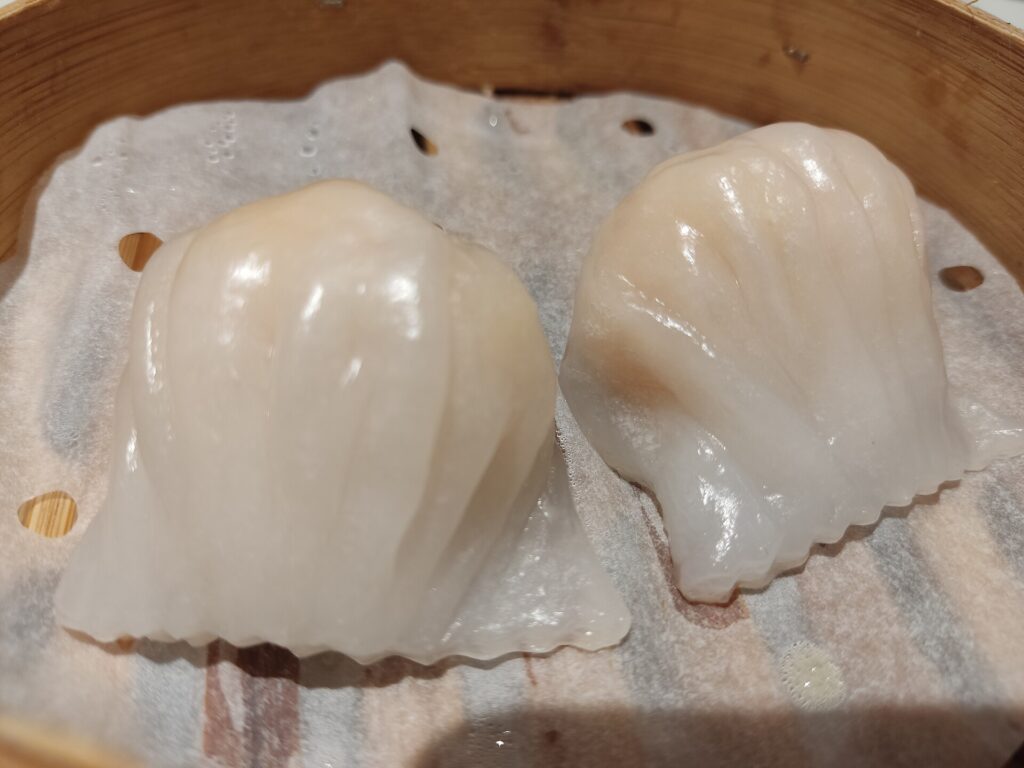
No reliable count establishes how many Hong Kong restaurants use pre-made dim sum. The Guangzhou ordinance classifies production methods, not simply factory versus handmade, and its penalty section does not state a separate labeling fine. The photo shows har gow at a Mong Kok restaurant in 2022, not a venue discussed in the story.
Corrections
No correction notes have been added for this article.
Since May, Guangzhou teahouses have had to say whether their dim sum was made by traditional methods on-site. Hong Kong has no equivalent disclosure rule, leaving diners to ask how their order was prepared.
HONG KONG, October 19, 2026. Guangzhou now requires teahouses to tell customers whether dim sum was made traditionally on the premises or by other methods. Across the border in Hong Kong, the menu can remain silent.
That distinction is difficult to spot in a bamboo steamer. A plate of har gow does not announce whether it was folded in a restaurant kitchen or delivered ready to heat. The question is not whether prepared food belongs on the menu. It is whether diners should be told what they are buying.
What Guangzhou’s rule actually says
Guangzhou’s morning-tea preservation regulation took effect on May 1. Article 8 requires operators to disclose, on menus or in another prominent way, whether morning-tea food is made by traditional methods on-site or by nontraditional methods. It permits different prices for the same dish prepared in those different ways.
The regulation also says traditionally made on-site food should be served within 24 hours of preparation, with an exception where a traditional process needs longer and an industry body specifies it. It calls for kitchens or viewing arrangements that show customers how the food is made. A separate voluntary certification identifies traditional teahouses that provide food made on-site.
This is a disclosure rule, not a ban on centrally prepared dim sum. Nor does the ordinance say every dish described as “nontraditional” came from a factory. Its categories concern method and place of preparation. Guangzhou’s stated purpose is to preserve its morning-tea culture as intangible heritage while giving customers information and choice.
In Hong Kong, The Standard has reported that some teahouses have turned to pre-made dim sum to reduce costs. The scale of that shift is unclear. A January report by CUHK’s Varsity asserted that more than 80% of Hong Kong restaurants rely on pre-made dim sum, but did not provide a traceable survey or official count for the figure. It is not a sound basis for saying what most restaurants serve.
The gap in Hong Kong
Hong Kong has consumer-protection rules. Its Trade Descriptions Ordinance prohibits false descriptions of goods, and its unfair-practices provisions can cover misleading omissions in their applicable circumstances. A restaurant that advertises a frozen, centrally prepared dumpling as freshly handmade on-site risks more than an unhappy review.
But the ordinance is not a general requirement to label every dim sum dish by its production method. Whether a particular menu, advertisement or omission breaks the law depends on the facts. Guangzhou has made the distinction visible before a customer orders; Hong Kong generally leaves the customer to ask, unless a trader’s own claims or conduct become misleading.
That difference matters to diners willing to pay more for work done by a restaurant’s own chefs. It also matters to those who would happily take a cheaper prepared plate. A label gives both groups a choice. It does not dictate which one they must make.
Tradition as a selling point
Some Hong Kong operators already put traditional service front and center. Lin Heung Lau staged a farewell “dim sum rave” at its former Central premises in May before relocating. Its Tsim Sha Tsui branch, which opened in 2025, advertises around-the-clock service and dim sum trolleys, according to the Hong Kong Tourism Board and the restaurant’s website. The Standard reported at the time of that branch’s launch that it would continue serving handmade dim sum.
The appeal is obvious: a visible craft can command attention in a market where convenience and labor costs press the other way. But a trolley is a way of serving food, not proof of where every dumpling was made. A clear description on the menu would do more work than nostalgia alone.
Would a label change anything?
Hong Kong could require a simple distinction between food prepared on-site and food prepared elsewhere, with a definition that restaurants can apply consistently. Or operators could disclose it voluntarily and see whether diners reward them. Neither approach settles how much handwork counts as handmade, or who would verify the claim.
A rule would also impose a burden on small restaurants. That is a real consideration, as is the risk of labels so vague they tell customers nothing. Guangzhou’s model at least makes the question explicit. Its published ordinance requires disclosure, although its specific penalty provisions address unauthorized use of traditional-teahouse certification and price marking, not a separately stated fine for failing to label a dish.
Hong Kong rightly treats dim sum as part of its food heritage. Diners should not need detective skills to learn whether the plate in front of them was made in the kitchen that served it.