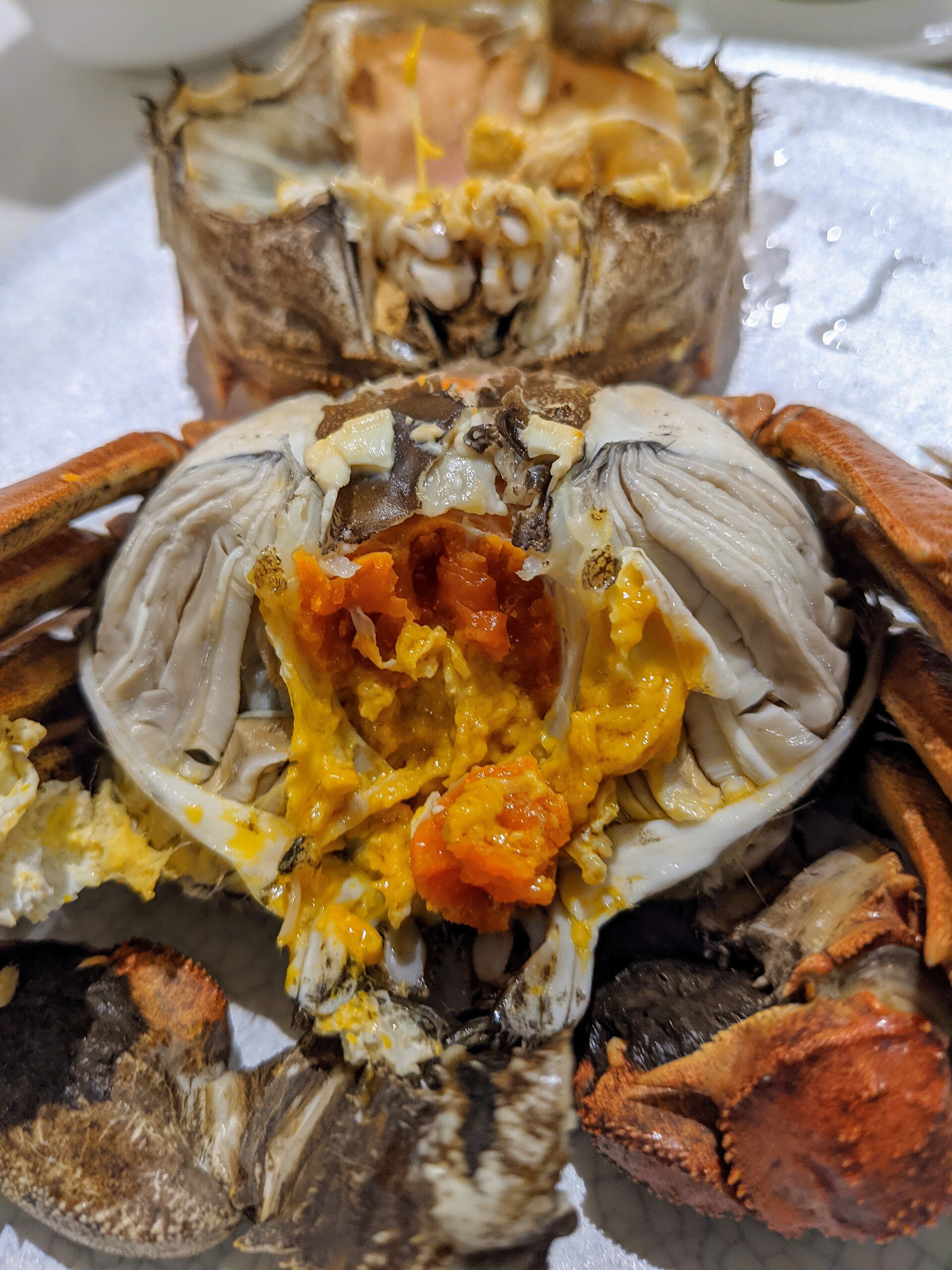
Autumn is hairy crab season in Hong Kong, and one hotel buffet lists the crab through November. Sellers need permission from the Food and Environmental Hygiene Department, and every crab needs cooking through.
Sheraton Hong Kong’s crab buffet, which lists steamed hairy crab at dinner, runs through November 30 at The Café in Tsim Sha Tsui, The Standard reported. The Centre for Food Safety (CFS) calls autumn the crab’s best season, and says to cook it through.
What hairy crab is, and why autumn matters
The freshwater hairy crab, named for the dense fuzz on its claws, is prized for its meat and roe. The CFS’s consumer guide calls autumn “the best season for savouring freshwater hairy crabs,” describing “very tasty, tender meat and delectable roe,” and says groceries, supermarkets and restaurants showcase the crab “prominently” during the season. In 2017, most of the hairy crabs sold in Hong Kong came from registered aquaculture farms on the Mainland, with others imported from places such as the Netherlands, Taiwan and Japan, according to the CFS’s Food Safety Focus of October 2017. The CFS’s guidance says only “autumn” and gives no fixed dates.
One hotel buffet lists hairy crab this season
Sheraton Hong Kong Hotel’s eShop listing names steamed seasonal hairy crab, dinner only, among the dishes at its Crab & Seafood Extravaganza buffet at The Café in Tsim Sha Tsui, which runs from September 14 to November 30. Dinner is 6:30pm to 10pm, and the listing says buffet items are served on a rotational basis. The listing advertises discounts of up to 30 percent, and The Standard quoted separate Klook promotional prices, so prices are left out here; confirm with the hotel before booking.
A separate warning this week concerns a different restaurant. On October 7, Fulum Group said a “Klook × Tao Yuen hairy crab buffet” offered at 30 percent off through social media and WhatsApp was fake and had been reported to police, according to HK01 and am730. Fulum urged customers not to give personal or card details through unverified links, pages or WhatsApp accounts, am730 reported.
Buying hairy crab in Hong Kong: permits and certificates
Hairy crabs are restricted food under Hong Kong’s Food Business Regulation. Operators selling them need a Shell Fish (Hairy Crab) Permit or written permission from the Food and Environmental Hygiene Department; shops already holding another relevant FEHD licence, such as a fresh provision shop licence, and fish stalls in FEHD markets must apply for written permission, according to an FEHD release of December 2, 2025. Premises must display the permit or licence prominently and keep a copy of the health certificate issued by the relevant authority. Online-only sellers need an online sale of restricted food permit and must show the permit number, registered address and the restricted foods covered on their website or account homepage. Under the regulation, selling restricted foods without permission carries a maximum fine of HK$50,000 and six months in prison on conviction, the release said, the same maximum it gives for selling food unfit for human consumption under the Public Health and Municipal Services Ordinance.
The December 2, 2025 release described late-November checks. FEHD and Customs officers inspected 50 premises selling hairy crabs and found no contravention, though Customs referred 16 suspected cases at boundary control points over six weeks, intercepting more than 1,900 crabs. Separately, the department said it began prosecutions against two public market stalls for selling hairy crabs without permission and gave verbal warnings to six online platforms that failed to display permit details. The CFS’s November 14, 2025 release reported that all 98 hairy crab samples it collected from January to the end of October 2025 were satisfactory in chemical tests, which covered veterinary drug residues, metallic contaminants, synthetic hormones, coloring matter, pesticide residues and dioxins.
How to buy and cook hairy crab safely
The CFS’s advice is to buy from reliable shops holding the permit, check that the crabs are kept in a refrigerator, and choose live crabs with intact, shiny shells and no foul smell, since dead crabs are highly perishable. At home, it says to brush and wash the shells and claws, store raw crabs covered and apart from other food, cook them thoroughly and remove the internal organs completely before eating. Salt, vinegar, wine and wasabi, it warns, cannot kill bacteria or parasites in a raw crab.
It also advises against eating too many, particularly the cholesterol-rich roe. Suspected unlicensed sellers can be reported to the FEHD hotline on 2868 0000, and suspected false trade descriptions to Customs on 182 8080. The advice in short: buy from a shop that holds the permit, and cook the crab all the way through.