Receipts attached 4 sources
Sources
-
Other source
Applications for designation under the arrangement on interim measures
Primary announcement, application criteria, deadline, term and expected timeline.
-
Other source
Applications invited for designation under interim-measures arrangement
Restates the Department of Justice notice; same government source family.
-
Other source
Interim Measures Arrangement
Explains the mechanism and its operation.
-
Other source
Dispute Resolution 2026: Hong Kong SAR, Trends and Developments
General interim-measures context; does not address the 2019 arrangement.
Limits
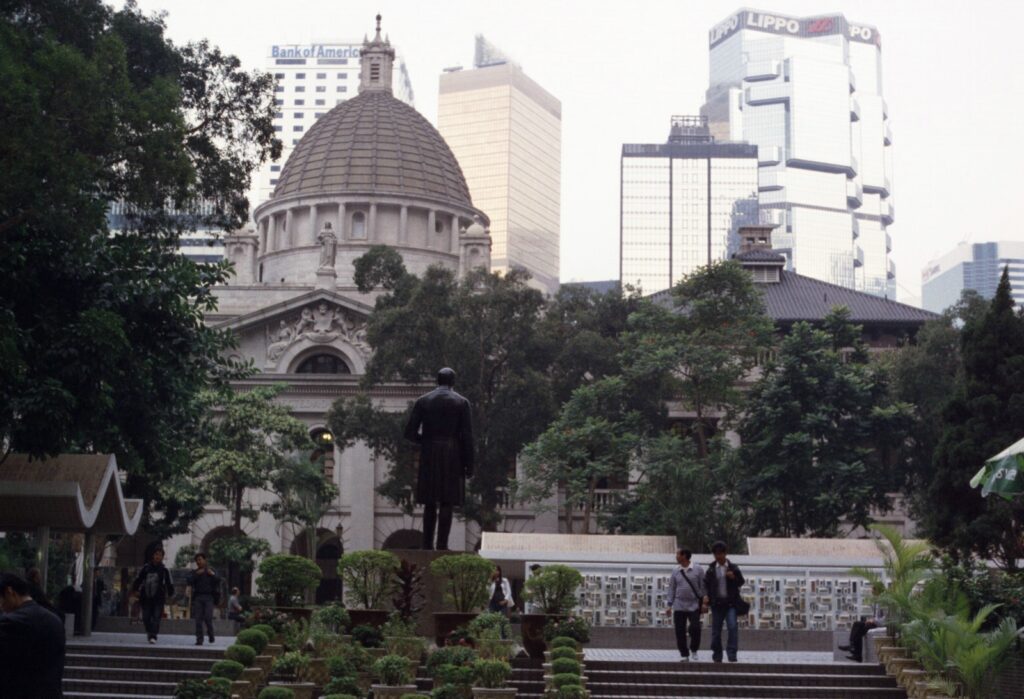
The opening of the November 2 application round rests on a single government source family: the Department of Justice notice and a GovHK release that restates it. The mechanism is described by HKIAC; Chambers provides general context and does not discuss the 2019 arrangement. Article 2(1)(3) criteria apply only to that route. Results are expected around March 2027, not guaranteed. Individual relief remains for Mainland courts to decide. The hero is a contextual image of Statue Square, not a court or hearing.
Corrections
No correction notes have been added for this article.
Hong Kong’s Department of Justice on November 2 opened a new round of applications for arbitration and dispute-resolution institutions and permanent offices seeking designation under Article 2(1) of the 2019 Mainland-Hong Kong arrangement on court-ordered interim measures, with submissions due on or before December 1, 2026. Successful applicants would be designated for three years.
The announcement, published by the Department of Justice and restated in a Government Information Services press release, is a designation exercise under the existing arrangement. It refreshes the roster of institutions whose Hong Kong-seated, institution-administered arbitrations can access the cross-border mechanism.
What designation does and does not do
Under the arrangement, a party to arbitral proceedings seated in Hong Kong and administered by a qualified institution may apply to the relevant Mainland court for interim measures, such as asset or evidence preservation, before an award is issued, according to the Hong Kong International Arbitration Centre (HKIAC). HKIAC, itself qualified under Article 2, says such applications go to the Intermediate People’s Court where the respondent resides or where the property or evidence is located, and that the court decides any relief under Mainland law.
Designation therefore sets who may use the route, not what a court will order. Being on the list does not guarantee that a party will apply, that an application will succeed, or that any measure will be granted; those remain decisions for the Mainland courts. HKIAC notes the arrangement came into force on October 1, 2019 and applies to interim-measures applications made on or after that date.
Who qualifies under the interim measures arrangement
The DoJ invited applications from arbitration and dispute-resolution institutions and permanent offices, and said existing qualified bodies must also submit a fresh application if they wish to stay designated. Applications and supporting documents must be filed in writing, by post or email, on or before December 1, 2026, and the DoJ said it may ask for further information before considering an application.
The notice sets out three qualifying routes under Article 2(1). For applicants under paragraph (3), the DoJ’s criteria are at least five years of continuous operation in Hong Kong administering arbitration cases; at least three Hong Kong-seated cases over the past three years, including one involving a party that is not a Hong Kong permanent resident or legal person; and at least HK$12 million in total amounts in dispute over that period. The DoJ said it has published an updated guidance note on the requirements.
The DoJ says the other routes cover arbitral institutions established in Hong Kong or headquartered there with their principal place of management in the city, and dispute-resolution bodies or permanent offices set up in Hong Kong by intergovernmental organizations of which China is a member. The third route applies to offices established by other arbitral institutions.
In the notice, the DoJ ties qualification to the institution’s legal category and place of establishment, as well as the seat and administration of the arbitration. The distinctions matter because the Article 2(1)(3) numerical test applies to the third route, rather than replacing the separate conditions for the other two.
Timeline and context
The DoJ said it expects to announce the results of this round around March 2027, while cautioning that the timing is an expectation rather than a commitment. It added that it may update the list or consider further applications from time to time.
The exercise sits within a broader push to position Hong Kong as a cross-border dispute-resolution venue, a theme reflected in practitioner commentary such as the Chambers and Partners 2026 Hong Kong dispute-resolution trends guide, which discusses the practical use of interim measures in arbitration generally rather than this specific arrangement. For institutions, the practical question is procedural: whether to file by December 1 and join the list that lets their cases reach into the Mainland courts, which will still decide every application on its own terms.