Receipts attached 9 sources
Sources
-
Other source
OASES seventh-batch announcement
Forecasts for all 142 partners; not delivered totals.
-
Other source
18 strategic firms, HK$10 billion in investment pledged
Yan’s new-batch projection and Chee’s conditional investment figure; full article paywalled.
-
Other source
Financial Secretary speech
Official account of earlier cohorts; no absolute six-cohort delivered totals.
-
Other source
Financial Secretary April speech
Six-cohort forecast of HK$73 billion and 25,000 jobs.
-
Other source
Top pharma firms in new batch of strategic businesses
Original report of Yan’s five-year-plan and subsidy statements.
-
Other source
Valcambi and Shiu Wing Steel plan precious-metals venture
Letter of intent, not an operating refinery.
-
Other source
Solana Company strategic-enterprise announcement
Office claim and planned validator operations.
-
Other source
Hong Kong attracts 124 strategic enterprises
Peng’s first-five delivered figures.
-
Other source
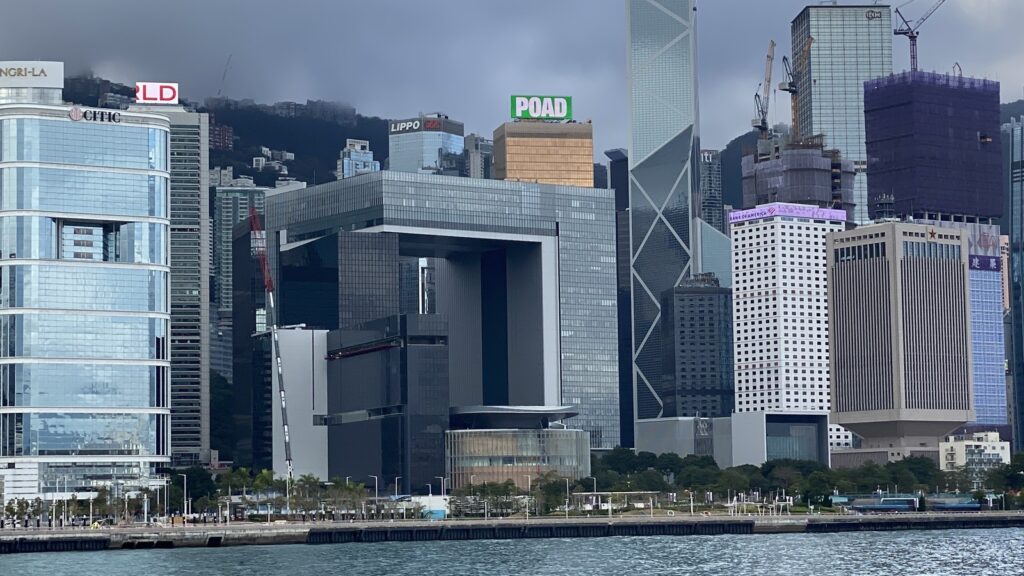
Central Government Offices and Legislative Council, 14 January 2023
2023 contextual image; credit in featured-media caption.

Limits
The HK$84 billion and 26,700 jobs are projections for all seven cohorts, not delivered totals. The new-batch HK$10 billion and 1,600 jobs, and Solana Company’s HK$200 million, are attributed plans. June realized figures cover five cohorts; October performance percentages cover six. SCMP full text was paywalled; indexed excerpts checked for cited figures.
Corrections
No correction notes have been added for this article.
Hong Kong’s Office for Attracting Strategic Enterprises (OASES) welcomed 18 companies on Thursday, October 22, bringing its roster to 142 partners. The government’s combined forecast for all seven batches is about HK$84 billion in investment and 26,700 jobs over the coming years. The ceremony counted partners. It did not count money spent or jobs filled by the new arrivals. Half the new group came from the Chinese mainland and half from elsewhere, Financial Secretary Paul Chan said.
For the new batch alone, OASES director-general Peter Yan said the companies would bring more than HK$10 billion in investment and 1,600 jobs, according to the South China Morning Post. Those are plans, not delivered totals.
The batch forecast is close to the change in the programme-wide totals. When the sixth batch was announced, 124 enterprises were expected to bring HK$73 billion and about 25,000 jobs. The new totals are higher by roughly HK$11 billion and 1,700 jobs. That rough alignment does not prove earlier partners’ plans stayed unchanged: the totals are rounded, and OASES has not published a cohort-by-cohort reconciliation.
What the number is made of
The forecasts draw on the firms’ own plans. Yan told RTHK that partners submit five-year plans with investment figures, job targets and an initial flagship project, allowing the office to track progress. He said some government subsidies are disbursed only after targets are met. A planned investment, a subsidy contingent on delivery and cash already spent are different things.
Two new partners illustrate how far projects can be from completion. Swiss refiner Valcambi and Shiu Wing Steel signed an October 8 letter of intent for a refining and vaulting operation at the steel company’s Tuen Mun facility, Reuters reported. The proposed venture would serve Asia-Pacific customers. The Reuters report gave no construction date or capital-spending figure. A letter of intent is a step toward a plant, not an operating refinery.
Nasdaq-listed Solana Company, a digital-asset infrastructure business distinct from the Solana blockchain network, says it has established a Hong Kong office for its Asia-Pacific operations. It says local validator operations are planned. Its chief executive, Joseph Chee, told the South China Morning Post the company had committed to at least HK$200 million in investment over five years, subject to the development of the Solana blockchain in Hong Kong. That is a conditional commitment, not a report of HK$200 million already invested.
An office said to be open, planned validator operations and a proposed refinery are different milestones. Appearing at the same ceremony does not make them equivalent.
Two clocks
Chan offered a measure of delivery in his ceremony speech. He said investment by the first six batches had exceeded expectations by 30 percent, jobs created were 34 percent above expectations, and those firms had taken up more than 2.8 million square feet of commercial and industrial space. His speech did not give absolute investment and job totals for those six batches or the original targets behind the percentages.
A June report in The Standard supplies an earlier snapshot. OASES executive director Bryan Peng put actual investment by the first five batches at HK$22.5 billion, 30 percent above target, and jobs created at 8,000, 17 percent above projection. Working backwards gives targets of roughly HK$17 billion and 6,800 jobs. Those are calculations from Peng’s rounded percentages, not separate office figures.
The investment overperformance was reported as 30 percent in both statements. The jobs figure rose from 17 percent for five batches in June to 34 percent for six in October. Adding a cohort could explain some of that difference, but the published statements do not show how much. Peng’s numbers are also the office’s account, not an independent audit.
The June delivered totals and the October HK$84 billion and 26,700-job forecast cover different groups at different dates. They cannot be used as a like-for-like completion rate.
The scorecard
If each partner files a five-year plan and some subsidies depend on targets, OASES has a basis for tracking commitments against delivery. Publishing investment received and jobs filled beside the original plans, cohort by cohort and with dates, would turn a roster into a result. Until then, a higher forecast is easy to mistake for money already in Hong Kong. The count that matters is what the new partners build and employ here.