Receipts attached 4 sources
Sources
-
Other source
Onebite Social, Project House @Chun On Pawn
-
Other source
HK01, closure and heritage history
-
Other source
am730, reopening reporting
-
Other source
Hero image
Archival or illustrative image; see credited media caption.

Limits
Desk-reported analysis. TockHK did not visit or interview participants. Contemporary observations and interviews are attributed to am730 and HK01; long-term plans and current visiting hours were not independently confirmed.
Corrections
No correction notes have been added for this article.
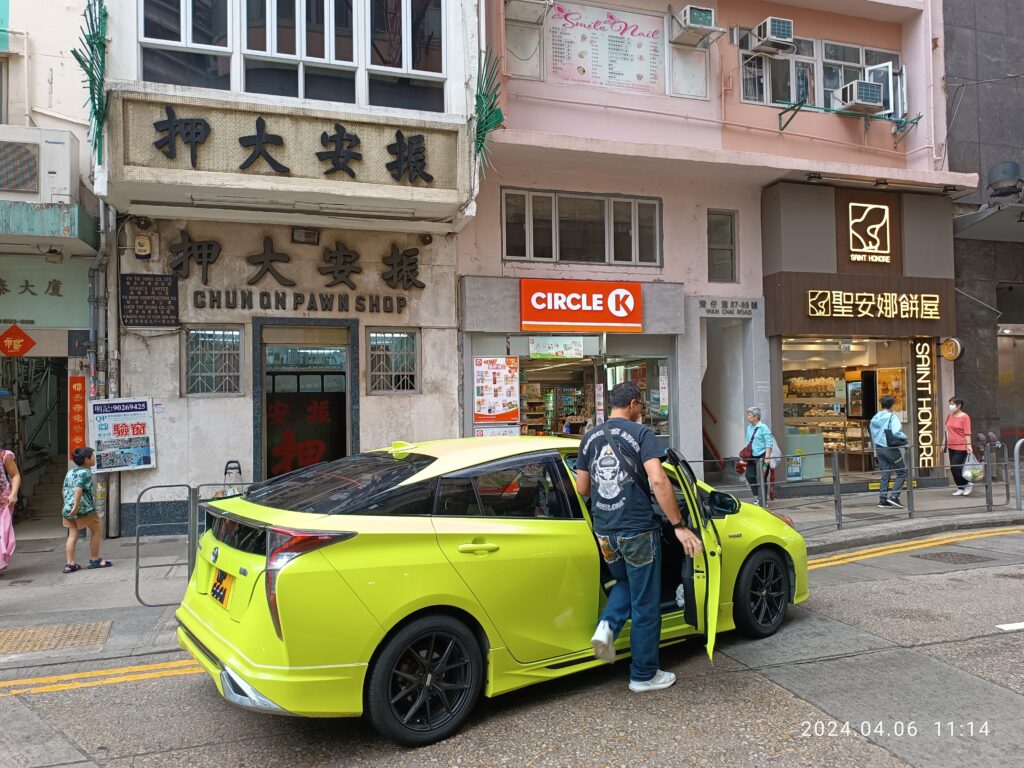
The former Chun On Pawn shop on Wan Chai Road has reopened as a temporary community space. Its new use raises a question beyond what can be saved inside an old building: who gets to use it, and for how long?
At 91 Wan Chai Road, the shop closed in September 2024 when its lease expired. HK01 reported at the time that unredeemed pledges had been moved to another pawnshop run by the owner. The business’s closure did not end the building’s story.
Onebite Social now operates Project House @Chun On Pawn at the address, with support from the Lion Rock Heritage Foundation. The operator describes a programme of exhibitions, guided tours and community gatherings. Its website presents the former pawnshop as a place to exchange stories and time rather than possessions.
What is being conserved?
HK01, citing a heritage assessment, reported that the four-storey tenement was likely built in 1924. It described balconies projecting over the pavement and a distinctive pyramidal roof. The shop, originally known as Kei Yuen, became Chun On in the 1940s, according to the assessment as reported by HK01. These details make the address more than a convenient venue for a pop-up.
The reinterpretation is tangible. In an October report, am730 described a preserved interior, a display of pawnbroking equipment and a coffee counter in the former shop. Those are observations by am730’s reporter, not by TockHK. Onebite’s own project page describes café seating, a history area and room for reading and gatherings.
am730 also interviewed a former neighbour who recalled her family pawning a quilt during a shortage of money. Her account is a reminder that the shop’s history is not only architectural. Pawning offered a way to bridge a financial gap, though the experience could carry stigma. Onebite’s “exchange” theme recasts that transaction as a voluntary sharing of memories; whether such programming sustains the building’s connection to its neighbours is a question that cannot be answered by a short opening alone.
A temporary answer
Onebite calls the project a 125-day window before the building’s next stage. Its earlier Project House programme has also used vacant premises for limited runs in several Hong Kong neighbourhoods. A temporary opening can give the public access and test a community use without claiming to settle the building’s long-term future.
That limit is central to this experiment. Onebite’s project director told am730 that the team would discuss longer-term plans with the owner; the report did not announce an agreed permanent use. For now, Chun On shows one alternative to turning a historic shop into another restaurant. Whether that alternative survives the pop-up remains unknown.